
This compound interest tool is designed to demonstrate the power of long-term investing and compounding. The table illustrates how different rates of return and investment timeframes can significantly impact future values.
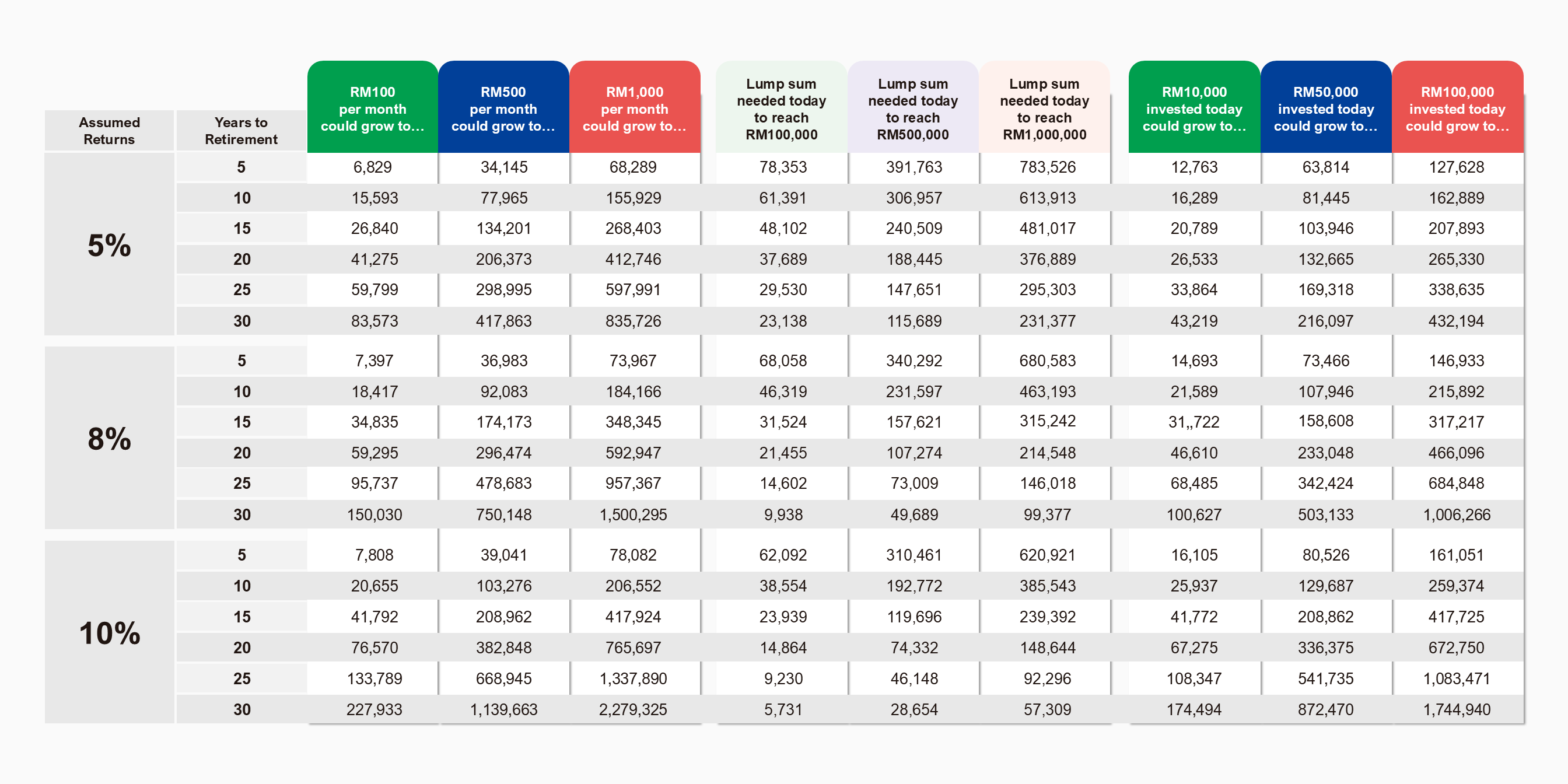
The above information may contain projections or other forward-looking statements regarding future events, targets, management discipline or other expectations. There is no assurance that such events will occur, and the future course may be significantly different from that shown here. Table above is for illustration purposes only.
Time is one of the most valuable advantages in investing. Starting earlier allows investments more years to grow, not just on the money you put in, but also on the returns earned along the way. The diference may seem small, but its impact on long-term wealth can be significant due to the power of compounding.
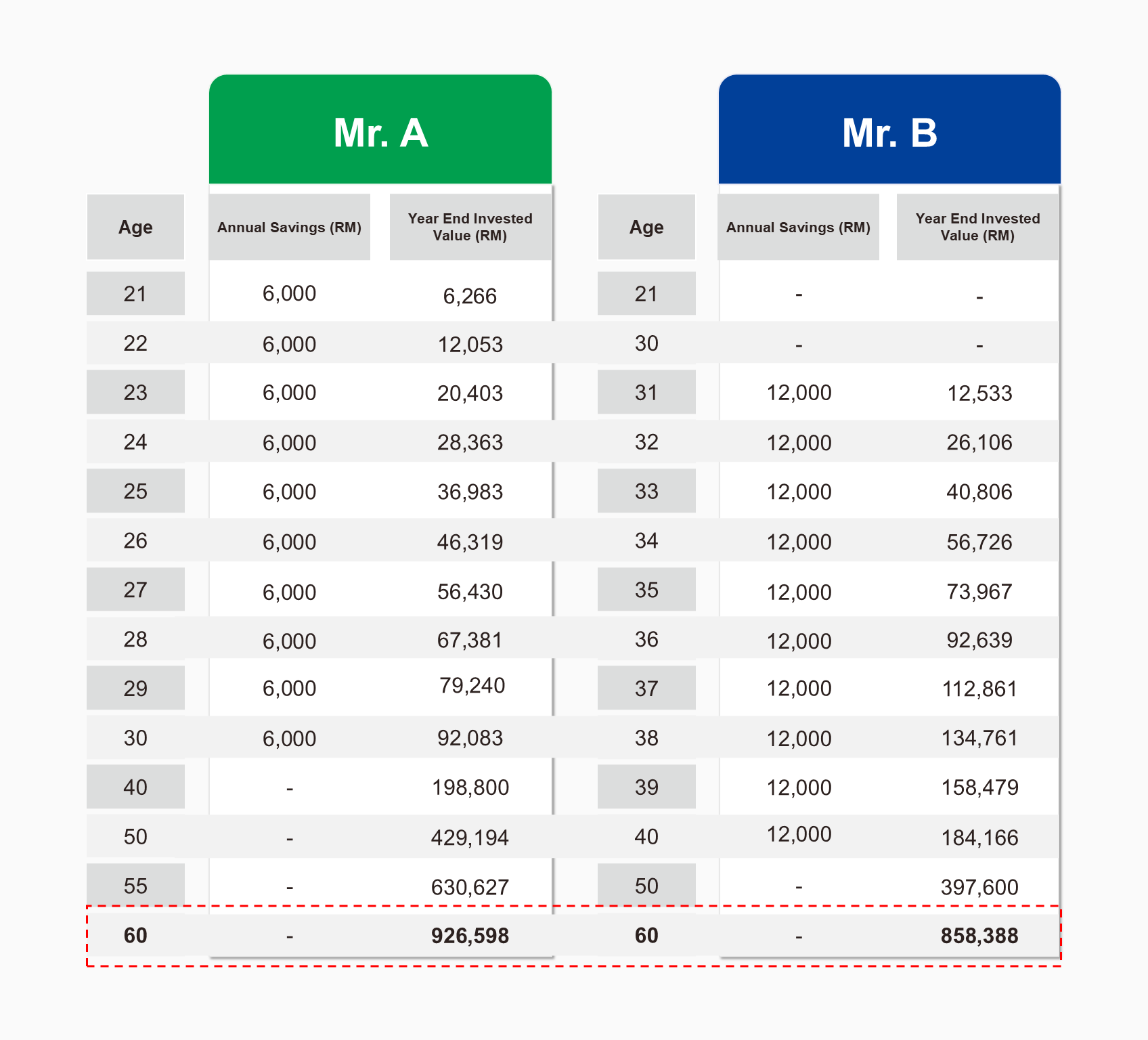
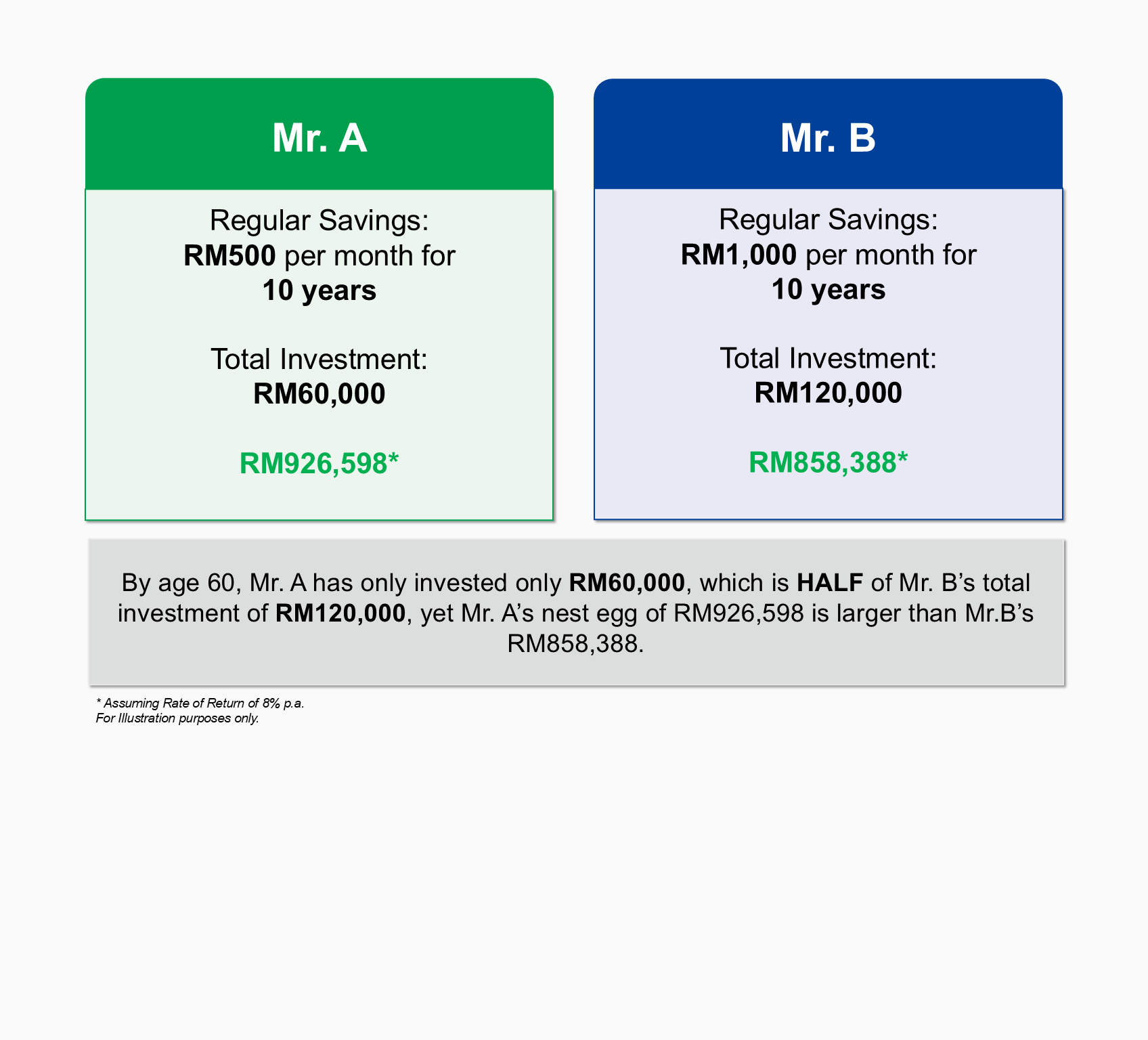
There is no single approach that is better for everyone. Lump sum investing and monthly investing serve different purposes and suit different financial situations, risk appetites and personal preferences. The most suitable approach depends on an individual’s cash flow, investment timeframe and comfort with market fluctuations.
A lump sum investment benefits from having more money invested earlier, allowing compound returns to accumulate over a longer period of time. This means the investment has more time to grow, assuming the same rate of return and investment horizon.
However, this does not mean higher returns are guaranteed, nor does it account for market volatility or timing risk.
Monthly investing demonstrates the impact of consistency and discipline. By investing smaller amounts regularly, investors can build wealth gradually over time without needing a large amount of money upfront. Over longer periods, regular contributions combined with compounding can result in significant accumulated value.
No. The table is illustrative only and does not recommend or favour any specific investment strategy. Its purpose is to help investors understand how time, assumed rates of return and investment patterns may affect long‑term outcomes.
Monthly investing may help spread investment timing over different market conditions, which can reduce the impact of market volatility at the point of entry. Lump sum investing may experience greater short‑term fluctuation, especially if markets move shortly after investing. However, all investments involve risk, and neither approach eliminates market risk.
The different rates of return are used to illustrate how varying assumptions can influence long‑term outcomes. They are not predictions or guarantees and do not represent the performance of any specific fund. Actual investment returns will vary based on market conditions and fund performance.
No. All figures shown are for illustration purposes only. They are not guaranteed returns and should not be taken as an indication of future performance. Investment values can rise or fall, and investors may receive back less than the amount invested.
No. The figures shown do not take into account fees, charges, taxes or inflation. These factors can have an impact on actual investment outcomes and should be considered when making investment decisions.

©1999 - 2026 Manulife Investment Management (M) Berhad (Registration No. 200801033087 (834424-U))





