
25 January 2024
Hui Min Ng, Portfolio Manager, Equities

Asia Pacific (ex-Japan) REITs (Asia REITs) experienced a challenging 2023 on the back of a restrictive interest rate environment and uncertainty over the timing of a Federal Reserve (Fed) monetary policy pivot. Additionally, high rates across the Asia region led to concerns of significant asset de-valuations. However, a more dovish tone from the Fed, coupled with expectations of potential rate cuts, drove a strong rally in Asia REITs in the fourth quarter. As Hui Min Ng, Portfolio Manager, outlines in this 2024 outlook, Asia REITs offer investors a unique income opportunity in the new year as rates have likely peaked with the possibility of declining borrowing costs in 2024.
2023 was another volatile year for Asia REITs. Performance challenges were apparent for most of the period due to the high interest-rate environment, uncertainty around borrowing costs vis-à-vis the Fed’s rate-hike profile, and the negative implications for REIT distributions, asset values, and growth opportunities. However, Asia REITs rebounded strongly in November and December 2023 as global 10-year benchmark yields declined in response to the Fed’s dovish tone (See Charts 11 and 2). This led to market expectations for potential rate cuts in 2024.
Chart 1: Asia REIT geographic performance, 2023 and November/December 2023
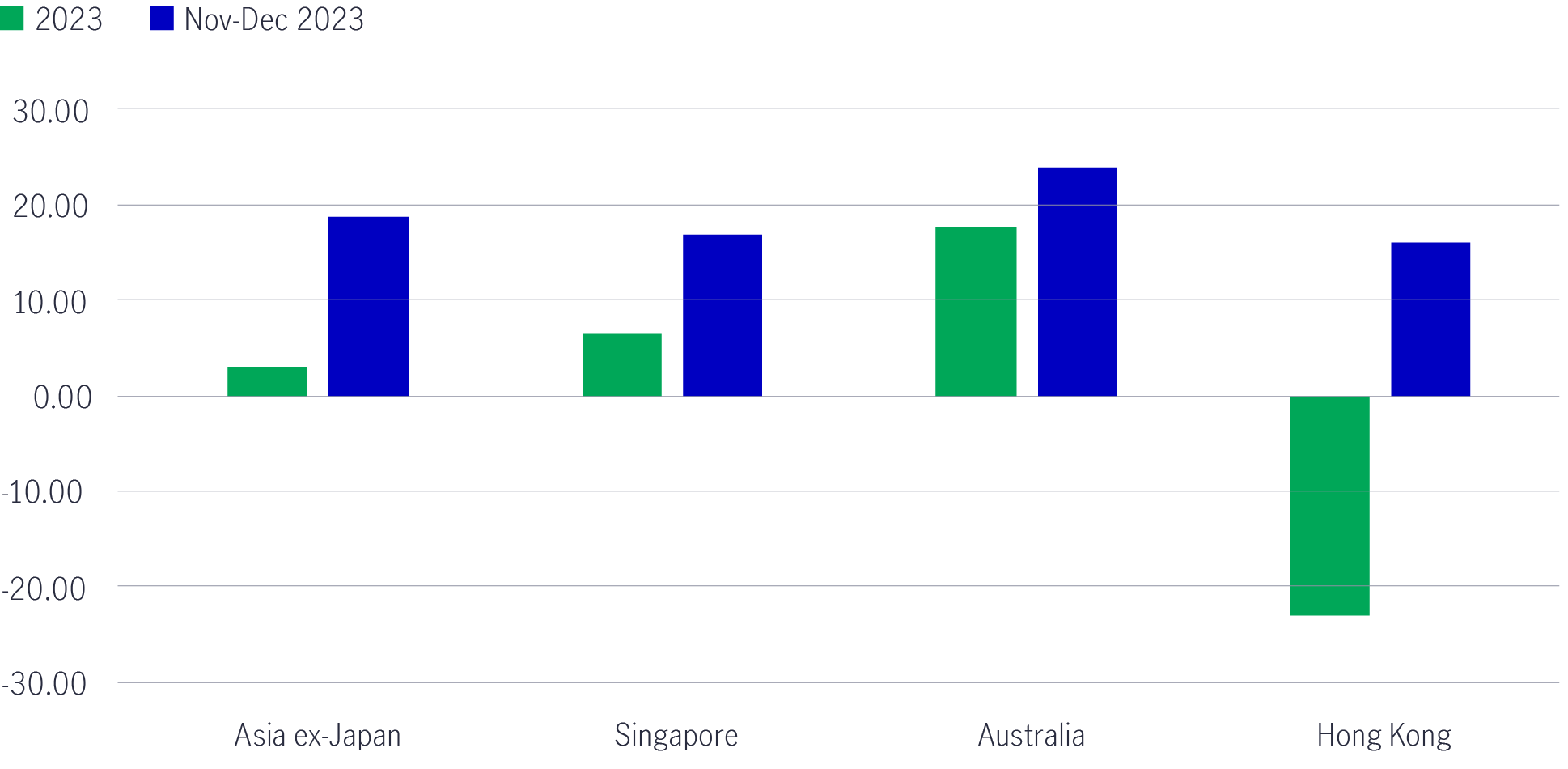
Chart 2: Asia REIT sector performance, 2023 and November/December 20232
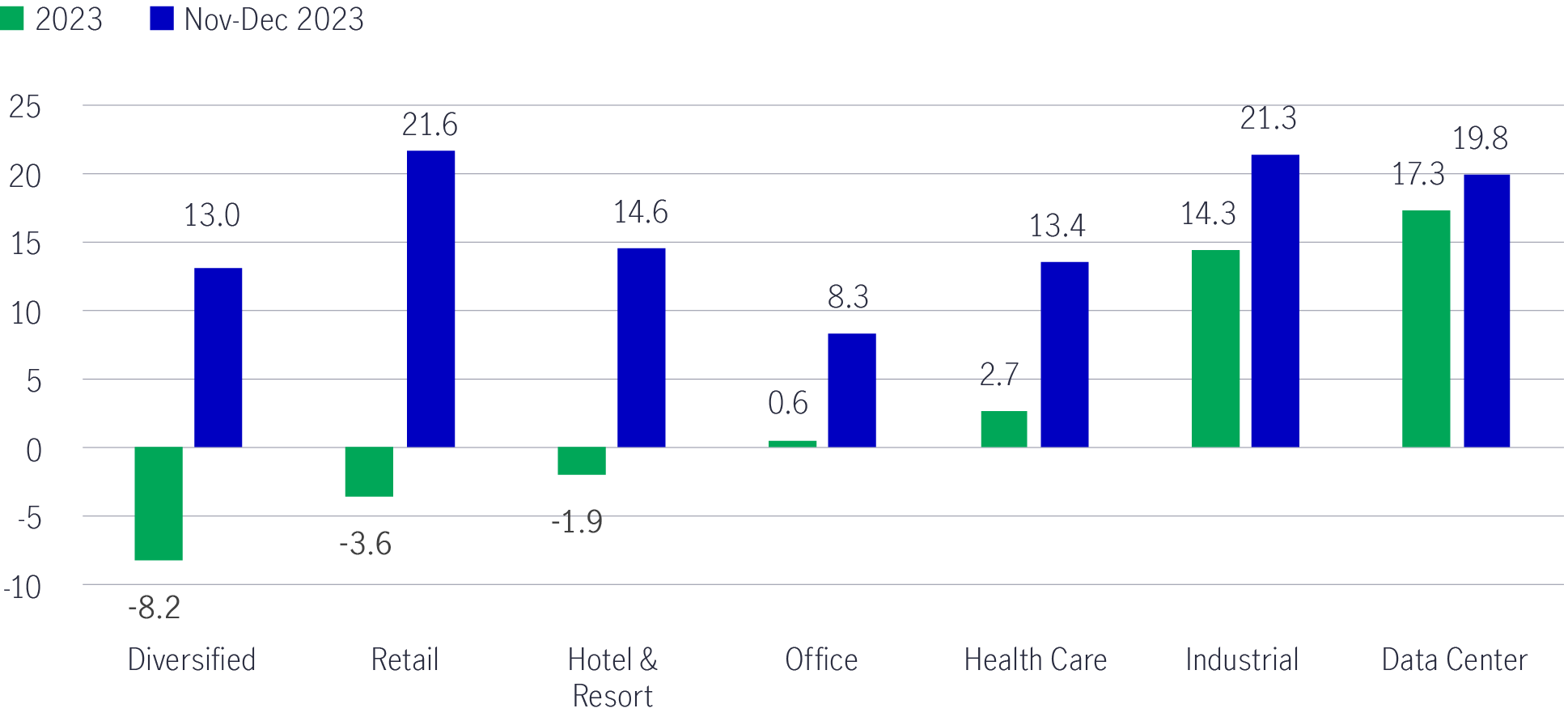
Overall, Australia REITs were clear beneficiaries of the changing interest-rate narrative, given they are the most sensitive to US rate moves. In contrast, Hong Kong’s underperformance was more idiosyncratic due to concerns about the impact of China’s economic slowdown on Hong Kong’s reopening optimism.
Despite the persistent macro headwinds negatively impacting Asia REITs, the market’s underlying operational fundamentals remained resilient throughout the year. Positive rental reversions, high occupancy rates, and recovering demand were common drivers across most sectors, which helped mitigate some of the negative impacts on distribution and asset valuations that the market was pricing in.
Considering the potential lower rate environment, we believe that overall financial strength and resilient operational metrics should provide a base for growth momentum to improve once the interest-cost drag peaks in 2024.
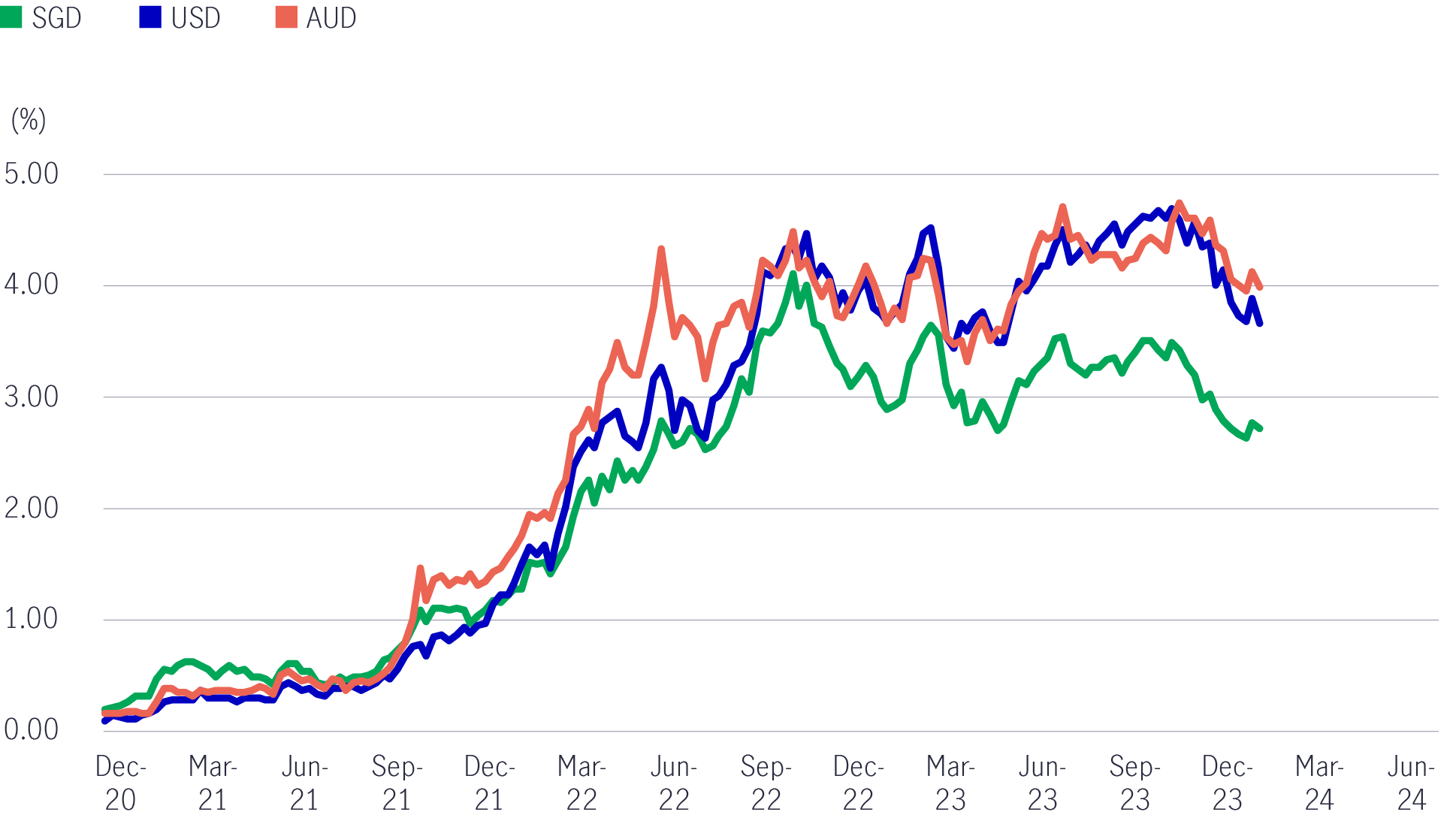
Key swap rates moved lower at the end of 2023 (See Chart 3), which indicates declining marginal debt cost for Asia REITs.
Chart 3: Three-year swap rates in selected markets
Source: Bloomberg, January 2024.
Today, the borrowing costs for new capital are lower than just three months ago. REITs will need to refinance their debt, and we expect that the cost of debt will peak soon.
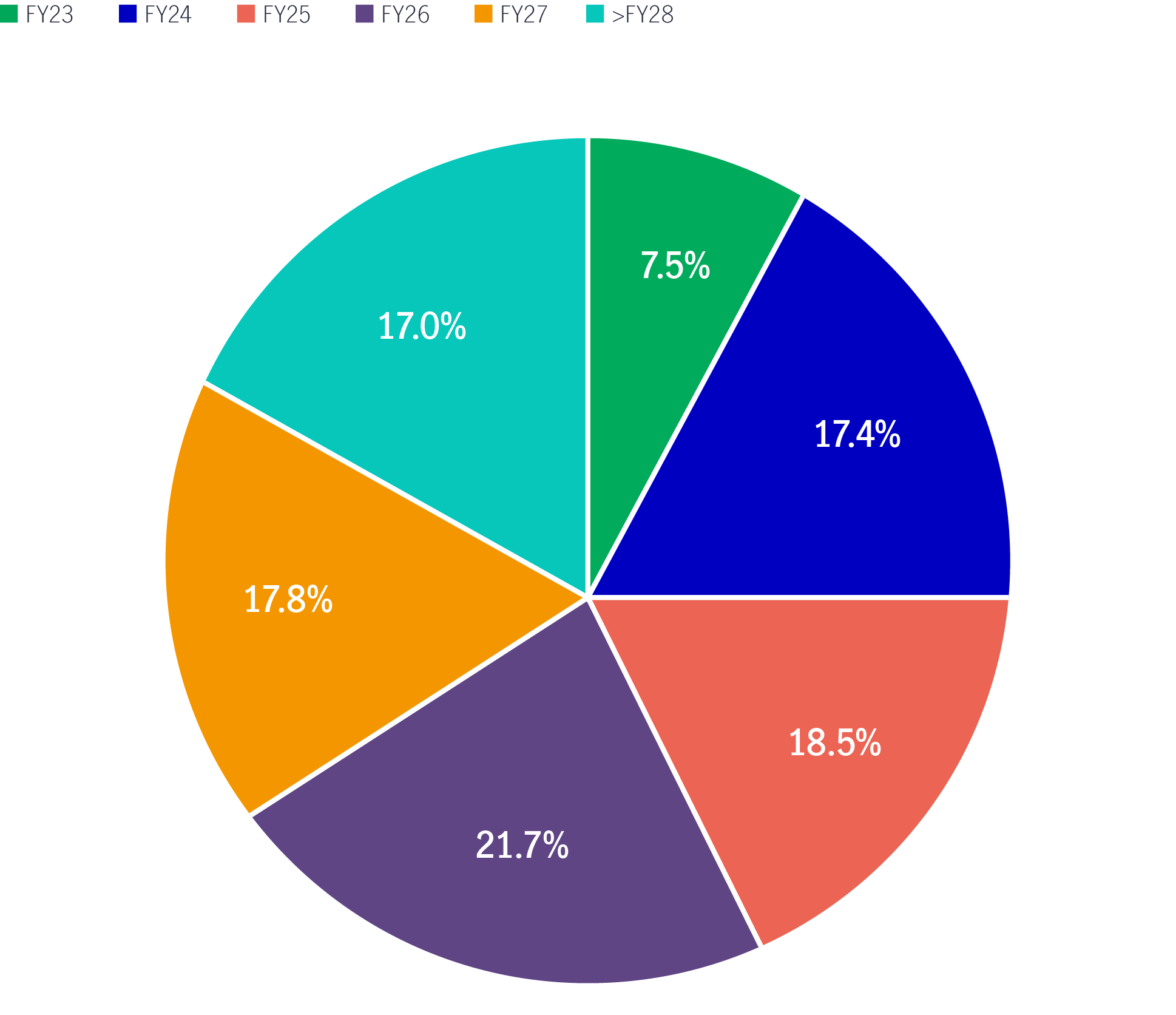
For 2024, the distribution per unit (DPU) outlook is muted. For instance, 25% of Singapore REIT debt will need to be refinanced (at still elevated rates) by the end of the year (See Chart 4). However, visibility has improved as lower rates in the second half of 2024 should allow for dividend growth to resume in 2025.
Chart 4: Debt expiry profile for Singapore REITs
Source: DBS Bank, January 2024.
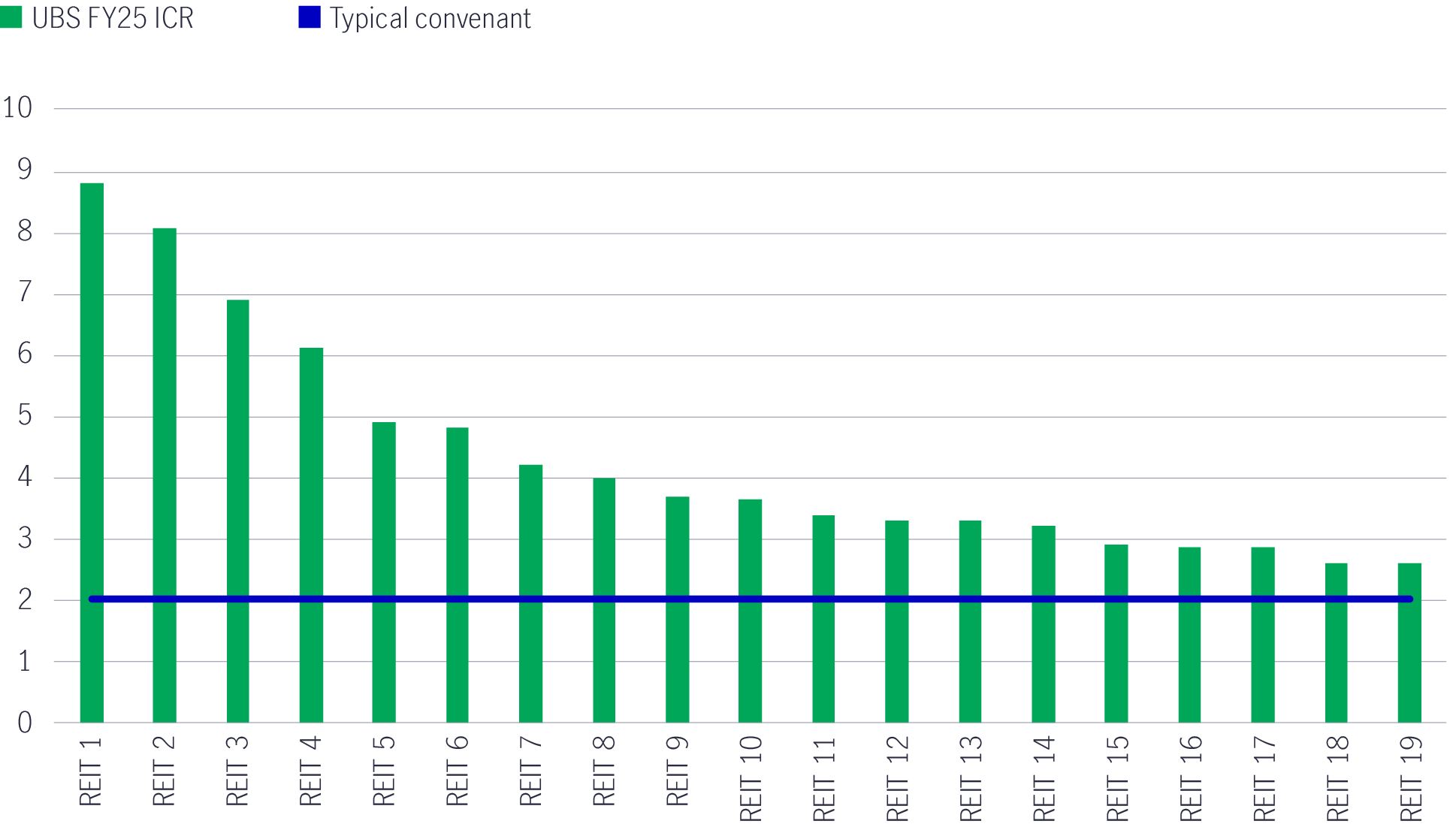
Meanwhile, in Australia, interest coverage ratios for most of the REIT sector are quite healthy and above the typical covenant levels (see Chart 5). As debt cost headwinds are subsiding, this could potentially relieve pressure on downward earnings revisions for FY 2025 (estimated).
Chart 5: Interest coverage ratio (FY25) for selected Australian REITs
Source: UBS, January 2024.
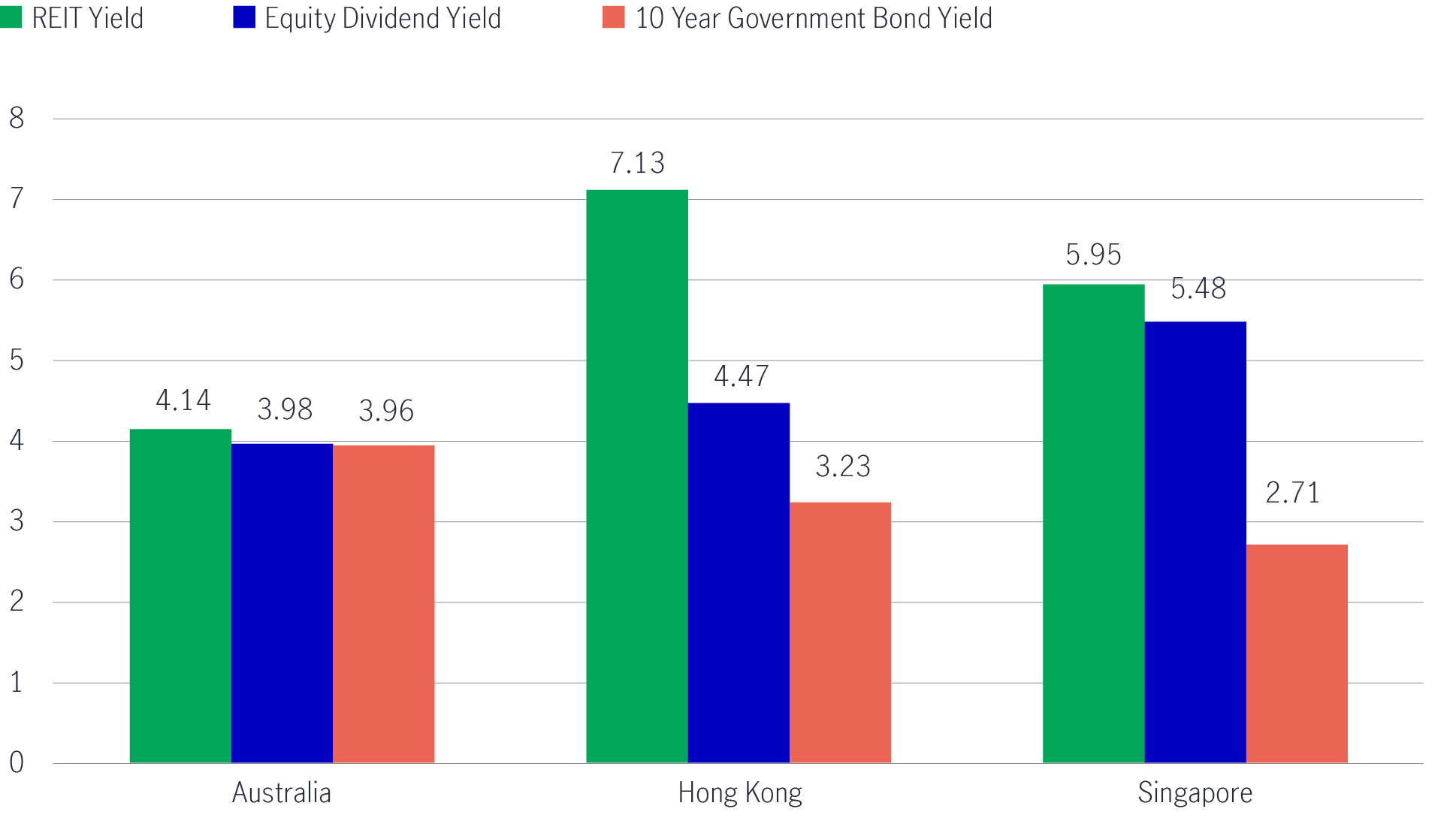
Despite the most recent rally, REIT yields are still attractive relative to other asset classes (See Chart 6).
Chart 6: Regional REIT yields still attractive among similar investments3
Source: Bloomberg, as of 31 December 2023.
As the macro headwinds of 2023 are expected to ease in 2024, we believe that the market (and investors) will begin to focus on the underlying fundamentals of REITs. Most Asia REITs have demonstrated resilient operating fundamentals, which we expect to continue in 2024.
This will be underpinned by recovering retail tenant sales amid limited new retail supply, regional supply chain shifts, and/or relatively tight supply, improving spot rentals for suburban retail, data centres and logistics. Furthermore, as leases signed at depressed rental rates during the height of COVID are renewed (particularly in retail), we see sustained healthy rental reversions.
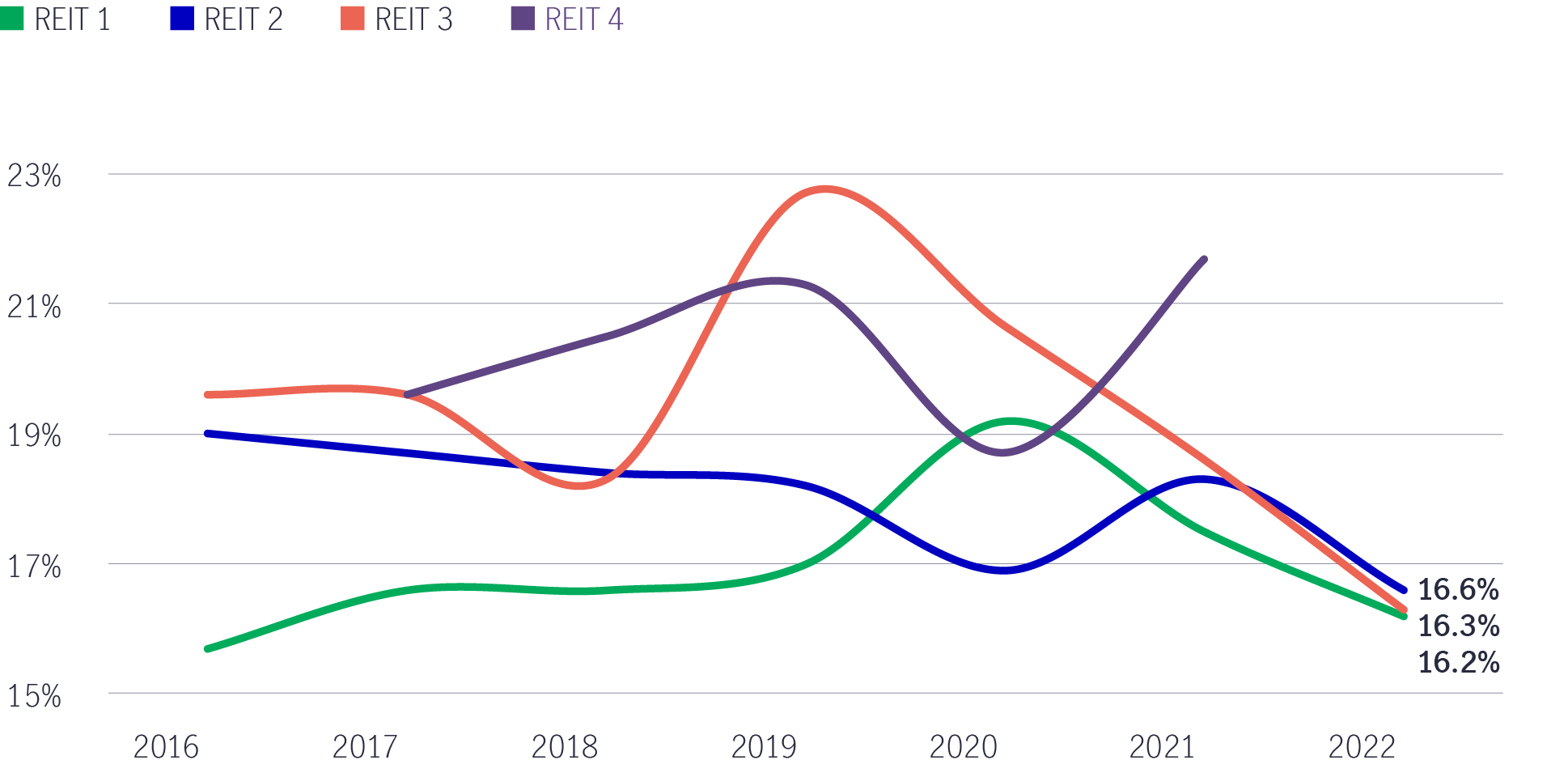
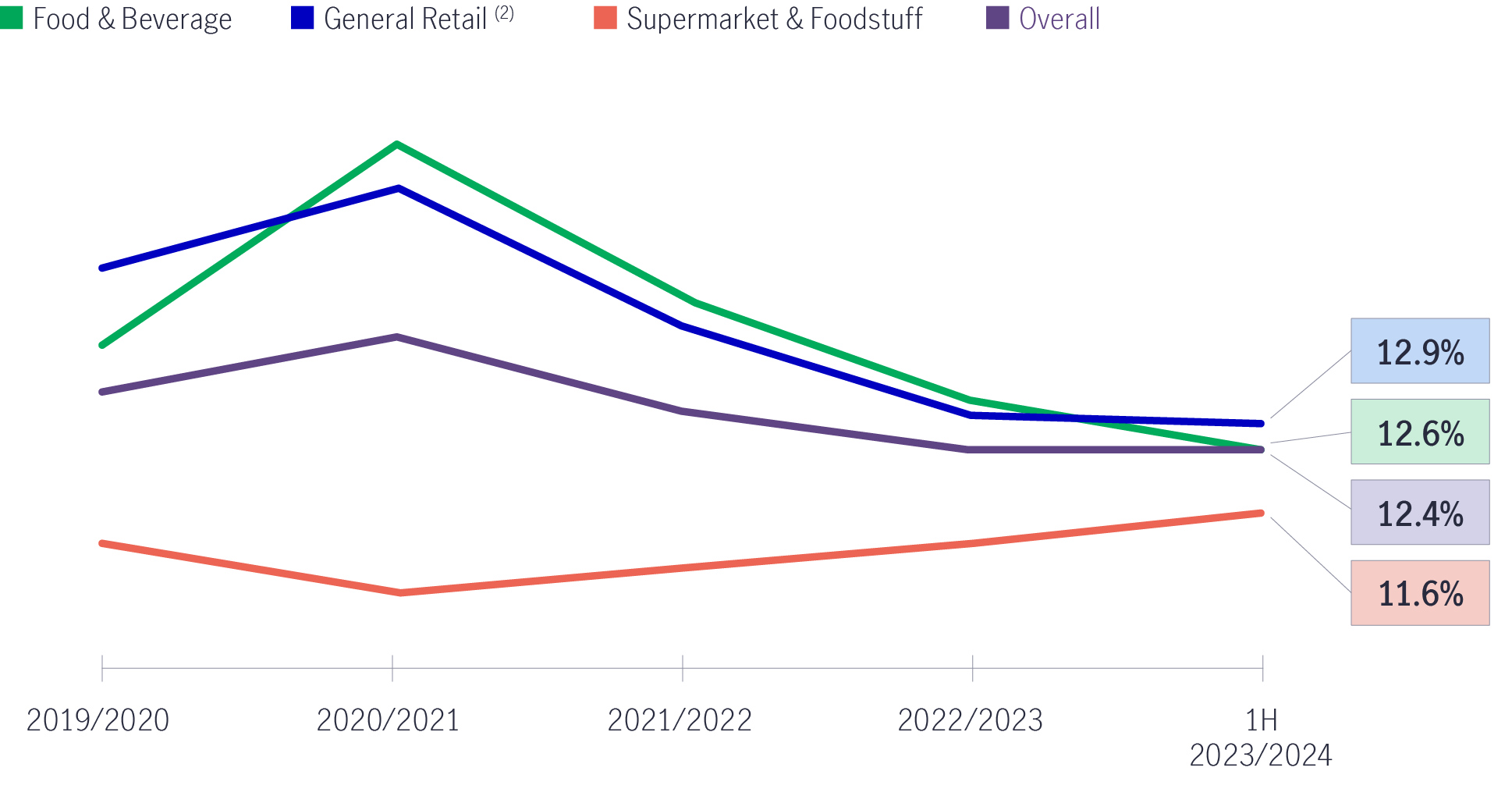
In Singapore and Hong Kong retail, we have seen a decline in the overall occupancy costs for tenants (See Chart 7 and 8). The lower the occupancy costs, the more room landlords have to raise rents. This should be one of the contributing factors to positive rental reversions for the retail sector in 2024.
Charts 7 and 8: Occupancy costs generally falling among Singapore retail REITs and across sectors4
Source: Company reports, DBS Bank, January 2024.
Source: Company reports, November 2023.
Industrial and data-centre REITs performed well during a turbulent year in 2023. These are sectors with structural growth where strong demand for assets and limited new supply resulted in high occupancy rates, positive rental reversions and distribution visibility. We believe the new economy story is still resilient, with data centre demand a bright spot.
While artificial intelligence (AI) is not a recent phenomenon, the rapid rise of consumer applications leveraging generative AI (e.g., ChatGPT) has seen AI emerge as a key market theme. The ongoing evolution of AI usage is expected to result in solid volume growth across the server industry in the next five years, with the AI service market, driven by AI-enabled hyperscalers, growing by an estimated 30% over that period.
As the server industry’s main growth driver changes from “storage” to “computing”, greater content expansion and demand for computing power should be positive for data centres.
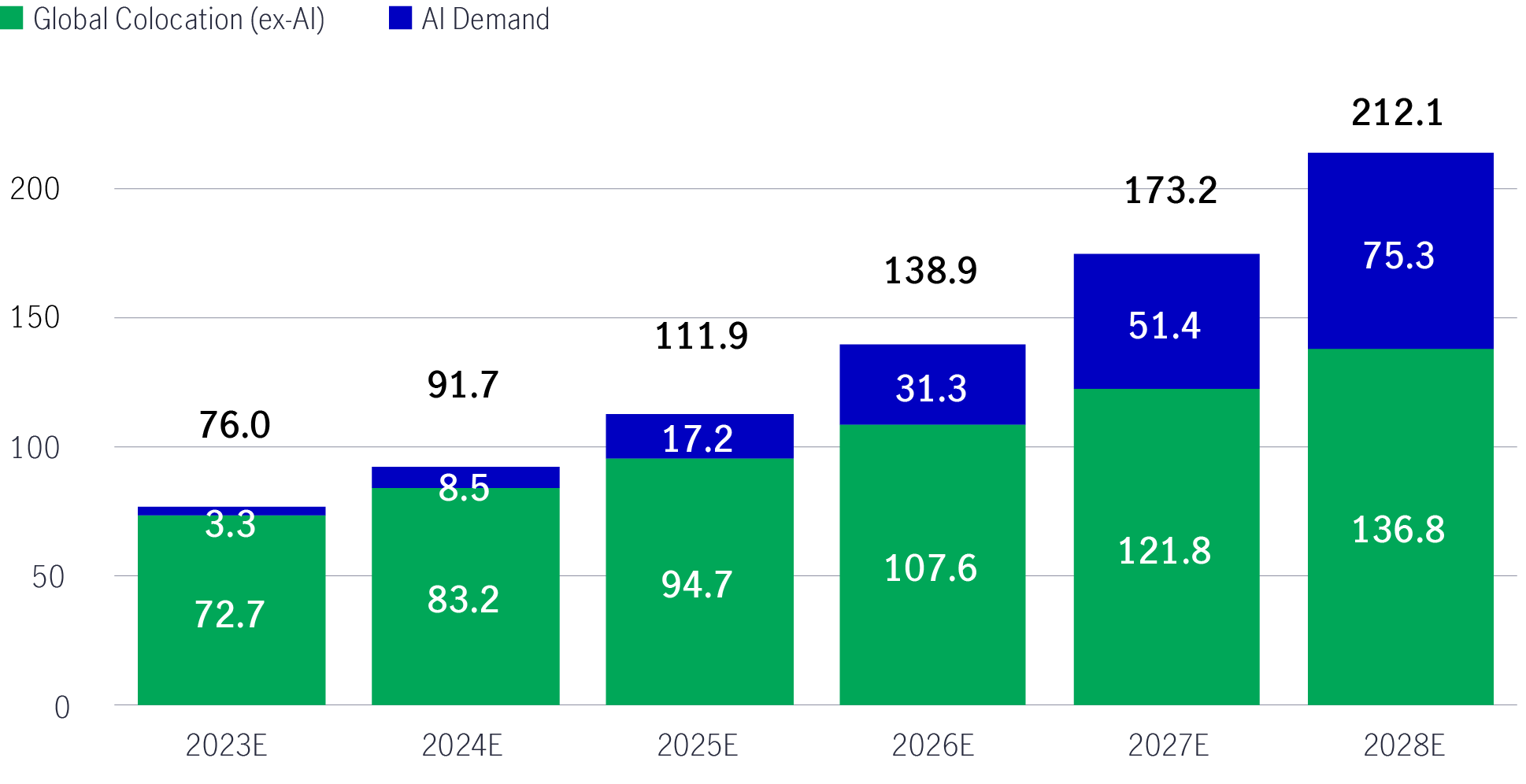
The contribution to the data-centre market growth from AI demand is expected to expand at a compound annual growth rate of 86% over the next five years. It should make up around 36% of the market by 2028, compared to approximately 4% in 20235.
Colocation demand, which is capacity that is leased from a third-party data centre operator, is also forecast to increase (See Chart 9).
Chart 9: Global co-location (ex-AI) and AI demand market forecasted to rise
Source: Structure Research, January 2024.
Note: Colocation – capacity that is leased from a third-party data centre operator.
While we are in the early stages of adoption, with use cases still fairly novel, the longer-term impact looks significant.
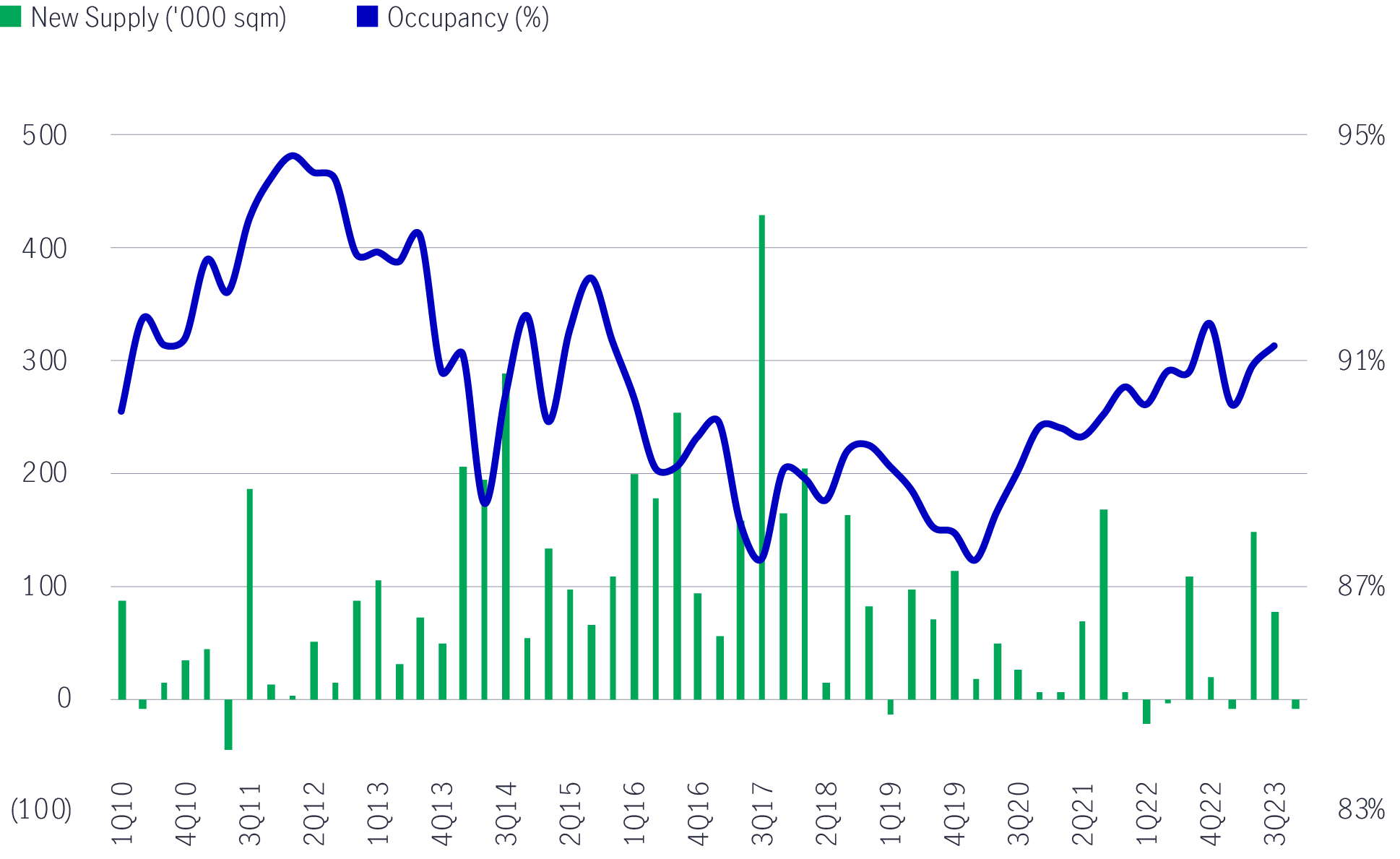
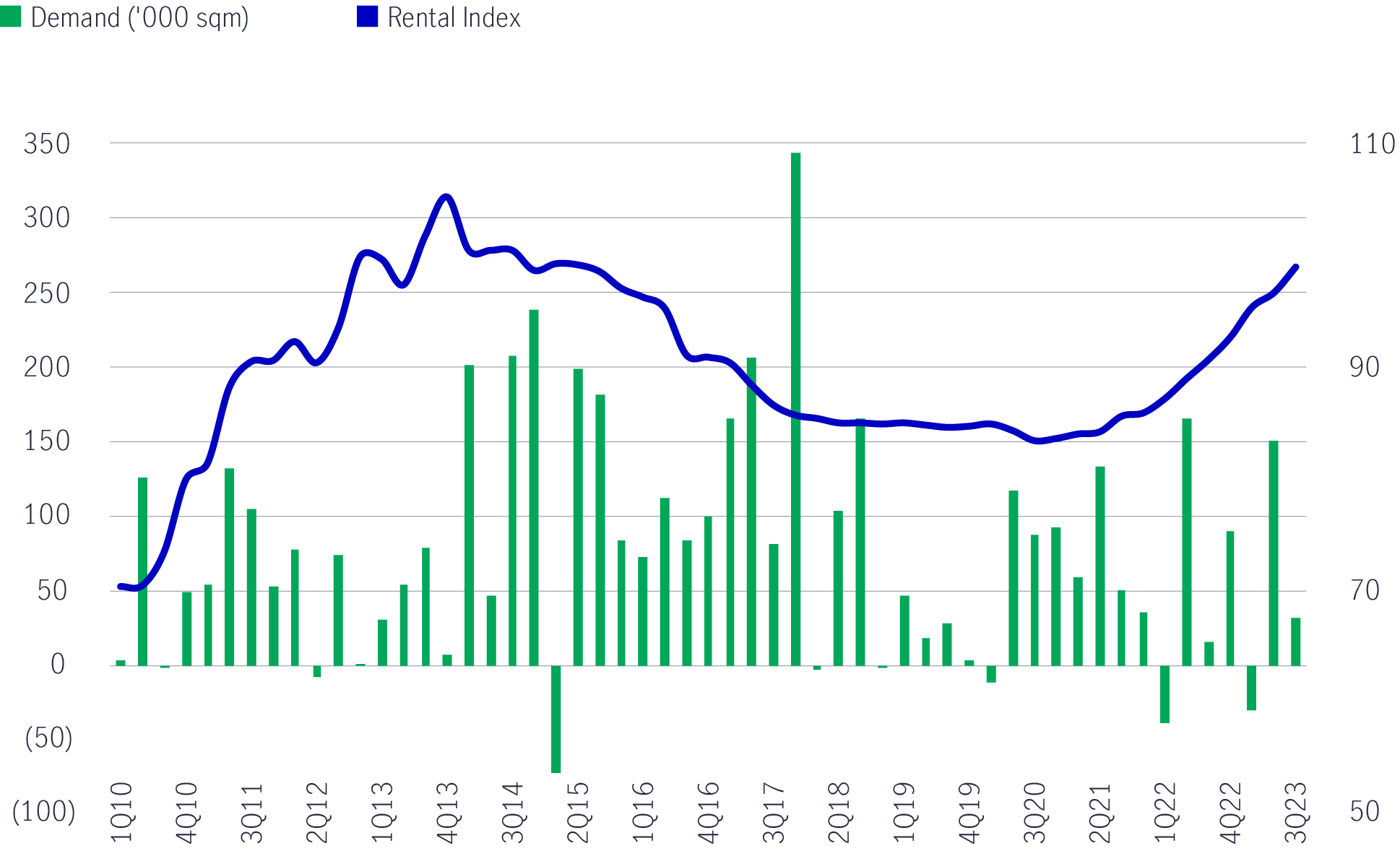
For industrial REITs, warehouse demand is expected to remain healthy, given the expansion of the logistics sector, with tenants still operating a just-in-case model. Considering where spot rents currently sit, this strong demand and improving occupancy should allow for positive rental reversions across the sector, driving organic growth (See Charts 10 and 11).
Charts 10 and 11: Lower supply with improving occupancy and stronger demand supports pricing
Source: DBS Bank, URA, January 2024.
As rates peak and begin to move lower throughout 2024, lower financing costs could result in a revival of M&A activity, allowing REITs to seek inorganic growth opportunities. This could provide support for medium to long-term DPU growth. We believe lowly- geared REITs can deploy their balance sheet capacity to deliver DPU-accretive acquisitions. Real-estate fund managers should also benefit from a pickup in transactional activities.
Despite an easing of headline macro challenges, fundamental aspects that deserve monitoring are tenant renewal risk and default risk. These factors would directly impact cash flow, which would negatively affect distributions.
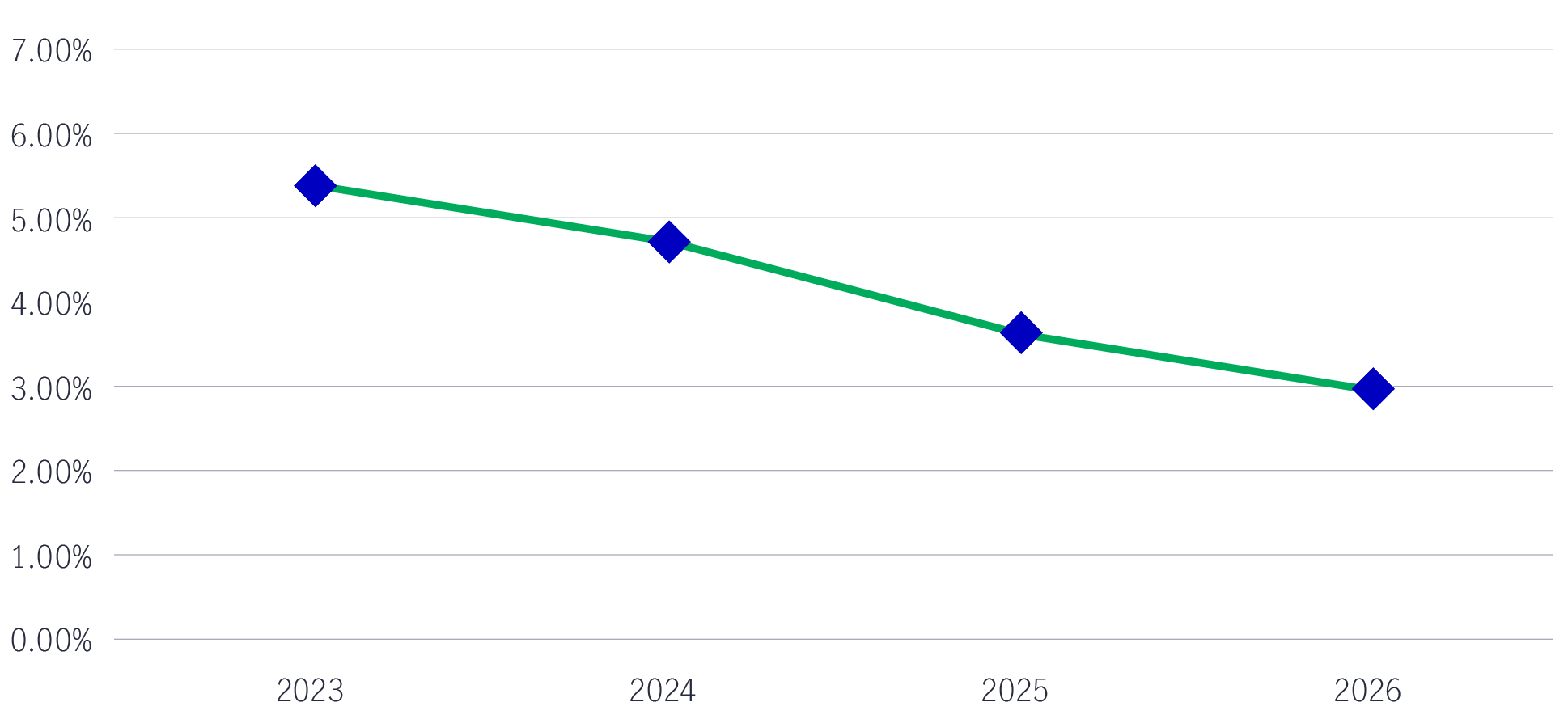
Entering 2024, Asia REITs should perform marginally better, given relatively low market expectations, discounted valuations and low sector exposure by investors. With peak hawkishness likely behind us, a key macro pressure point weighing on Asia REITs should reverse in the year ahead, as shown by the Federal Open Market Committee’s ‘dot plot’ (See Chart 12). Resilient operating fundamentals should continue in key sectors, providing investors with unique income opportunities in 2024.
Chart 12: FOMC dot plot (as of December 2023 meeting)
Source: Bloomberg, January 2024.
1 Source: Bloomberg, as of 31 December 2023. Asia ex Japan- S&P Pan Asia Ex-JP, AU, NZ, PK REIT 10% Capped Index (USD) TR; Australia- S&P/ASX 200 A-REIT Index; Hong Kong- Hang Seng REIT Index; Singapore- FTSE ST All-Share Real Estate Investment Trusts Index SGD.
2 Source: FactSet, Manulife Investment Management, as of 31 December 2023. Index: S&P Pan Asia Ex-JP, AU, NZ, PK REIT 10% Capped Index (USD) TR.
3 Source: Bloomberg, as of 31 December 2023. Equity dividend: Australia- S&P/ASX 200; HK- Hang Seng Index; Singapore- Straits Times Index. REITs: Australia- S&P/ASX 200 A-REIT Index; HK- FTSE EPRA Nareit Developed REITs HONG KONG Total Return Index USD; Singapore- FTSE ST All-Share Real Estate Investment Trusts Index SGD. Fixed Income: Australia- 10-year government bond; HK- HKMA Hong Kong Government Bond Fixing 10 Year Yield. Singapore- Monetary Authority of Singapore Benchmark Govt Bond Yield 10 Year.
4 REIT 4 performance data starts from 2017.
5 Source: Structure Research and Manulife Investment Management, January 2024.
2026 Mid-Year Outlook Series: Asia Equities ex-Japan
Asia equities ex-Japan continued the significant momentum from 2025 with strong performance throughout the first half of the year. Amid numerous catalysts, June Chua, Head of Asia Equities outlines in this Mid-Year Outlook why she is constructive on the asset class for the remainder of 2026. Positive drivers include: potential geopolitical resolution in the Middle East and lower energy costs, supportive earnings and valuations, and differentiated growth drivers across the region.
2026 Mid-year outlook: Greater China Equities
Greater China equity markets showed divergent trends in the first half of 2026, with China A-shares and the Taiwan Taiex index registering strong gains driven by resilient technology exports amid global demand for artificial intelligence (AI). Meanwhile, the MSCI China market pulled back, weighed by commerce subsidies amid fierce competition in food delivery and rising AI capital expenditure, which we believe have already been priced in. In this mid-year Outlook, we highlight five positive drivers for China and Hong Kong equities in the second half of the year. Furthermore, the team explains why it believes the Taiwan region’s technology sector should continue to enjoy positive momentum.
2026 Mid-year outlook: Global Semiconductor
The semiconductor sector remains a key enabler of the global economy, underpinning artificial intelligence (AI), cloud computing, and electrification. As highlighted in our earlier insights, it represents a broad ecosystem supported by structural demand and real infrastructure investment. Following strong year-to-date performance, we see growing conviction that momentum can extend into the second half of 2026 and into 2027, driven by earnings strength, sustained capital investment, and early-stage AI adoption.
Watching on the U.S. mid-terms? What history tells us about market performance and behaviour
As U.S. midterm elections approach in November, louder headlines may tempt some investors to wait on the sidelines. We believe history offers some useful context for understanding market behaviour around election cycles. Here is what decades of election-cycle data may tell us, and why patience has often mattered.
Navigating higher for longer rates: Scarce real assets, enduring demand
Real assets offer exposure to some of the most essential parts of the global economy, from energy networks and critical infrastructure to inflation-linked securities and selected real estate sectors. In a world of elevated geopolitical risks, shifting supply chains and ongoing inflation concerns, these assets can provide both resilience and diversification when traditional markets face pressure.
Fed hikes rates for first time since 2023 as expected
Today’s Federal Open Market Committee (FOMC) decision and press conference went smoothly—a welcome development, in our judgment, after the mixed signals that emerged from the Fed’s July meeting. The rate decision: A 25 basis-point (bps) hike, bringing the federal funds rate from 3.75% to 4.00%.

©1999 - 2026 Manulife Investment Management (M) Berhad (Registration No. 200801033087 (834424-U))


